

What Is Auto Insurance?
Auto insurance is a legally binding contract between a vehicle owner (the policyholder) and an insurance company (the insurer). Under this agreement, the policyholder pays regular premiums in exchange for financial protection against covered losses including accidents, theft, natural disasters, and liability claims.
In essence, auto insurance transfers the financial risk of vehicle ownership from the individual driver to the insurance company. Rather than bearing potentially substantial out-of-pocket costs following an accident, the policyholder files a claim and the insurer covers eligible expenses according to the policy’s terms, conditions, deductibles, and coverage limits.
How Auto Insurance Works
Auto insurance operates on the principle of shared risk. Thousands of policyholders contribute premiums into a collective pool, and while most never experience catastrophic losses, their contributions enable insurers to compensate those who do.
When a covered event occurs such as a collision, theft, or weather damage the policyholder files a claim. The insurer then investigates the incident, determines coverage eligibility, assesses the damage, and pays compensation according to the policy terms.
Example scenario:
A driver rear-ends another vehicle, causing damage to both cars and injuring several passengers. The insurer investigates liability, then covers repair costs, medical expenses, and related claims as outlined in the policy. Without insurance, these expenses could financially devastate individuals and families.
Key Parties Involved
The Policyholder
The policyholder is the individual or entity that purchases the insurance policy and pays premiums. They are responsible for maintaining accurate information, paying premiums on time, and complying with all policy conditions.
The Insurance Company (Insurer)
The insurer is the company that assumes financial responsibility for covered losses. It evaluates risk, determines premium rates, investigates claims, and provides compensation when valid claims are filed.
Beneficiaries
In some cases, benefits such as accidental death coverage or specific policy endorsements may be payable to designated beneficiaries rather than the policyholder.
Third Parties
Third parties are individuals or organizations injured or damaged by the actions of the insured driver. These may include other drivers, passengers, pedestrians, cyclists, and property owners. Liability insurance primarily exists to protect and compensate these third parties.
Basic Principles of Auto Insurance
Understanding a few core insurance concepts enables policyholders to interpret their coverage more effectively.
Risk Pooling
Insurance companies distribute financial risk across a large group of policyholders. Since only a small percentage of insured drivers experience major losses annually, insurers can compensate those who do while maintaining financial stability.
Premiums
A premium is the cost of maintaining insurance coverage, typically paid monthly, quarterly, semi-annually, or annually. Premium amounts vary based on driver age, driving record, vehicle type, location, selected coverage, claims history, and deductible amount. Higher risk profiles generally result in higher premiums.
Deductibles
A deductible is the amount the policyholder pays out-of-pocket before insurance coverage begins. For example, if a vehicle repair costs $4,500 with a $500 deductible, the insurer pays $4,000. Higher deductibles generally lower premiums because the policyholder assumes greater financial responsibility.
Coverage Limits
Coverage limits represent the maximum amount an insurer will pay for a covered claim. For example, bodily injury liability might be limited to $100,000 per person and $300,000 per accident. If damages exceed these limits, the policyholder is responsible for the excess costs.
Claims
A claim is a formal request to the insurance company for payment of a covered loss. Insurers typically require accident reports, police reports (when applicable), photographs, repair estimates, medical records, and witness statements. Insurance adjusters review this documentation before approving payment.
Mandatory vs. Optional Auto Insurance
Not all insurance coverage is legally required.

Mandatory Coverage
Nearly all states require liability insurance, which covers bodily injury and property damage you cause to others in an accident. New Hampshire is the only state where car insurance remains optional, though drivers must demonstrate financial responsibility. No-fault states—including Florida, Hawaii, Kansas, Kentucky, Massachusetts, Michigan, Minnesota, New Jersey, New York, North Dakota, Pennsylvania, and Utah—require drivers to carry Personal Injury Protection (PIP) coverage.
Driving without legally required insurance may result in heavy fines, license suspension, vehicle impoundment, criminal penalties, and increased insurance costs.
Optional Coverage
Collision and comprehensive coverage are always optional regardless of state law, but lenders typically require both when you finance or lease a vehicle to protect their investment. If required coverage lapses on a financed vehicle, the lender may purchase force-placed insurance on your behalf at substantially higher rates.
Additional optional coverages include gap insurance, rental reimbursement, roadside assistance, and uninsured/underinsured motorist coverage. Although optional, these coverages often provide valuable financial protection, especially for newer or financed vehicles.
Why Auto Insurance Is Important
Auto insurance is one of the most important financial protections a vehicle owner can have. Beyond satisfying legal requirements, it shields drivers from substantial financial hardship while ensuring that accident victims receive appropriate compensation.
Without adequate insurance, even a relatively minor accident can lead to thousands of dollars in unexpected expenses. More serious collisions involving injuries, multiple vehicles, or property damage can create financial obligations that last for years.
1. Legal Compliance
Driving without insurance is illegal in virtually every state and carries significant consequences, including hefty fines, license suspension, vehicle impoundment, and potentially jail time. For drivers who cause an accident while uninsured, they remain fully responsible for covering all damages out-of-pocket. Typical first-time fines range from $500 to $1,000, with repeat offenses potentially reaching $5,000 or more. Additionally, uninsured drivers face license suspension, and if insurance coverage lapses, many states will impound their vehicle until proof of insurance is provided.
2. Financial Protection Against Accidents
The average repair cost for a vehicle in 2025 is around $4,700 to $5,000. Modern vehicles require electronic scans before and after repairs, ADAS calibration, and often include complex systems with sensors, cameras, and specialty finishes that increase labor and parts costs. Accident costs extend beyond vehicle repairs to include medical treatment, emergency transportation, rehabilitation, legal expenses, and lost income.
Insurance helps absorb these unexpected costs, protecting policyholders from potentially devastating financial losses.
3. Protection from Lawsuits and Liability
If you cause an accident while uninsured, the financial burden falls entirely on you. A single liability lawsuit can hold you personally responsible for medical bills, property damage, and legal fees. Without the safety net of adequate liability insurance, your savings, investments, and future earnings could be seized to pay off court judgments and settlements.
4. Protection Against Theft, Vandalism, and Natural Disasters
Vehicles face severe risks long after you park them. In 2024, vehicle thefts in the U.S. surpassed 850,000 totaling roughly $8 billion in losses while hailstorms alone cause up to $15 billion in annual vehicle damage. Comprehensive insurance steps in to cover these non-collision events, including theft, fire, flooding, vandalism, and falling trees. For most owners, replacing a stolen or totaled vehicle out of pocket would be financially devastating.
5. Peace of Mind
One of the greatest benefits of auto insurance is confidence. Knowing that financial assistance is available after an unexpected event allows drivers to focus on safe driving rather than worrying about potentially catastrophic financial consequences. Insurance transforms uncertainty into manageable financial risk.
6. Support for Vehicle Repair or Replacement
Modern vehicles are essentially computers on wheels, packed with electronic sensors, cameras, radar, and Advanced Driver Assistance Systems (ADAS). Fixing these systems requires specialized calibration and certified technical expertise. Collision and comprehensive coverage ensure these high-tech repairs are done correctly, restoring your vehicle to safe operating condition. If a vehicle is damaged beyond economical repair, insurance provides a payout based on its actual cash value.
How Auto Insurance Works
Many people purchase insurance without fully understanding what happens between buying a policy and receiving payment after an accident. Knowing how the insurance process works helps policyholders make better decisions and reduces confusion when filing claims.
Step 1: Purchasing an Insurance Policy
The process begins by selecting an insurer and choosing appropriate coverage. The insurer evaluates several risk factors down to your specific ZIP code before determining the premium, including your age, driving record, claims history, vehicle type, and local crime or weather hazards. Your choices for coverage limits and deductibles will directly dictate your final premium. Once accepted, the policy goes live on the agreed-upon effective date.
Step 2: Paying Premiums
To keep your coverage active, you must pay your premiums on a selected schedule (monthly, semi-annually, or annually). Missing a payment can trigger a brief grace period, but ultimately leads to policy cancellation, a lapse in coverage, and significantly higher future premiums. Maintaining continuous, uninterrupted coverage is typically rewarded with better rates over time.
Step 3: Understanding Deductibles
A deductible represents the portion of a covered loss paid by the insured before insurance contributes. For example, if repairs total $3,500 with a $500 deductible, the policyholder pays $500 and insurance pays $3,000. Choosing a higher deductible typically lowers monthly premiums but increases out-of-pocket costs after a claim, while a lower deductible increases premiums but reduces immediate claim expenses.
Step 4: Filing a Claim After an Accident
When a covered event occurs, policyholders should notify their insurer as soon as possible. Generally, insurance companies have about 30 days to investigate claims, though this varies by state. The insurance company must acknowledge receipt of the claim and begin investigation within 15 days. The insurer typically requests the date and time of the incident, accident description, police report (if applicable), photos, contact information for involved parties, witness information, and medical documentation when necessary. Prompt reporting helps speed the claims process.
Step 5: Claims Investigation
An insurance adjuster investigates the incident to determine the cause of loss, liability, policy coverage, extent of damages, repair estimates, and any fraud indicators. Complex claims involving multiple serious injuries or disputed liability can take longer to investigate than straightforward accidents. Additional inspections or expert evaluations may be required for complicated claims.
Step 6: Settlement and Payment
Claims should be approved or denied within 35 days of filing, with extensions potentially adding 10 additional days if needed. Overall claim settlement can range from a few weeks to several months, depending on claim complexity and state laws. Once the investigation is complete, the insurer calculates the amount payable according to coverage purchased, policy limits, deductibles, vehicle valuation, and applicable endorsements. Payments may be made directly to repair shops, medical providers, policyholders, or third parties, depending on policy provisions and claim circumstances.
Step 7: Policy Renewal or Cancellation
Policies run for fixed terms, usually six or twelve months. Before expiration, your insurer will review your updated risk profile and offer a renewal package. Your new premium may fluctuate based on recent traffic violations, claims history, inflation, or newly available discounts. Policies can also be canceled prematurely by either party under specific contractual conditions.
Types of Auto Insurance Coverage
Auto insurance is not a one-size-fits-all product. Auto insurance typically includes a combination of coverages, including liability, comprehensive, collision, and uninsured/underinsured motorist coverage, along with gap insurance, PIP, and MedPay. Some coverages are legally required in certain jurisdictions, while others are optional but highly recommended depending on your financial situation, vehicle value, and driving habits. Understanding what each type of coverage does is essential for building a policy that provides adequate protection without paying for unnecessary benefits.
Liability Coverage
Liability insurance is the foundation of every auto insurance policy and is mandatory in most jurisdictions. Unlike other coverages that protect your own vehicle, liability coverage protects you financially if you are legally responsible for injuring another person or damaging someone else’s property in an accident.
Bodily Injury Liability
Bodily injury liability (BI) covers injuries or death suffered by other people when you are at fault in an accident. Covered expenses may include emergency medical treatment, hospitalization, surgery, rehabilitation, prescription medications, lost wages, pain and suffering (where permitted), legal defense costs, court judgments and settlements, and funeral expenses in fatal accidents.
It is important to note that bodily injury liability does not pay for your own injuries. Those expenses are covered through Personal Injury Protection (PIP), Medical Payments Coverage (MedPay), or your health insurance, depending on your policy and where you live.
Property Damage Liability
Property damage liability (PD) pays for damage you cause to another person’s property. This typically includes vehicle repairs or replacement, buildings, garages, fences, utility poles, mailboxes, street signs, guardrails, and landscaping.
Imagine losing control of your vehicle during heavy rain and crashing into a storefront. Property damage liability coverage helps pay for repairs to both the building and any damaged property, reducing your personal financial exposure.
Because repair costs continue to rise, many insurance professionals recommend purchasing liability limits well above the legal minimum whenever financially possible.
Collision Coverage
Collision coverage pays to repair or replace your own vehicle after it is damaged in a collision, regardless of who caused the accident. Unlike liability insurance, collision coverage focuses on protecting your own vehicle.
Collision insurance generally covers accidents involving another vehicle, trees, utility poles, guardrails, buildings, bridges, road barriers, pothole damage severe enough to cause a collision claim, and vehicle rollovers. Coverage typically applies whether you caused the accident, another driver caused it, the other driver cannot be identified, or you accidentally struck a stationary object.
Collision coverage is generally sold with a separate deductible, and even if you are at fault for the accident, your collision coverage will reimburse you for the costs of repairing your car, minus the deductible. Most lenders require collision coverage until an auto loan or lease has been paid in full.
Comprehensive Coverage
While collision insurance protects against crashes, comprehensive coverage helps cover the cost of damages to your vehicle when you’re involved in an accident that’s not caused by a collision, including losses like fire, theft, vandalism, glass breakage, natural disasters, falling objects and hitting an animal.
Comprehensive coverage is sometimes called “other-than-collision” insurance because it applies to losses unrelated to traffic accidents.
Common situations in which comprehensive coverage may apply include:
- Theft
If your insured vehicle is stolen and not recovered or is recovered with extensive damage comprehensive insurance generally pays its actual cash value, less your deductible. It may also cover damage resulting from attempted theft, including broken windows, damaged locks, and ignition system damage.
- Fire
Fire can result from electrical failures, fuel system problems, wildfires, garage fires, or arson (subject to investigation). Comprehensive insurance typically covers repair or replacement costs resulting from accidental fire damage.
- Flood
Flooding has become increasingly common due to severe weather events. Flood damage can affect engines, electronics, interior materials, transmission systems, and electrical wiring. Because flood damage often totals a vehicle, comprehensive coverage can be invaluable.
- Storm Damage
Comprehensive insurance usually covers weather-related losses caused by hailstorms, windstorms, hurricanes, tornadoes, lightning, heavy snowfall, and ice storms.
- Vandalism
Intentional damage by another person is generally covered under comprehensive insurance, including broken windows, key scratches, spray paint, slashed tires (policy-dependent), damaged mirrors, and interior destruction.
- Falling Objects
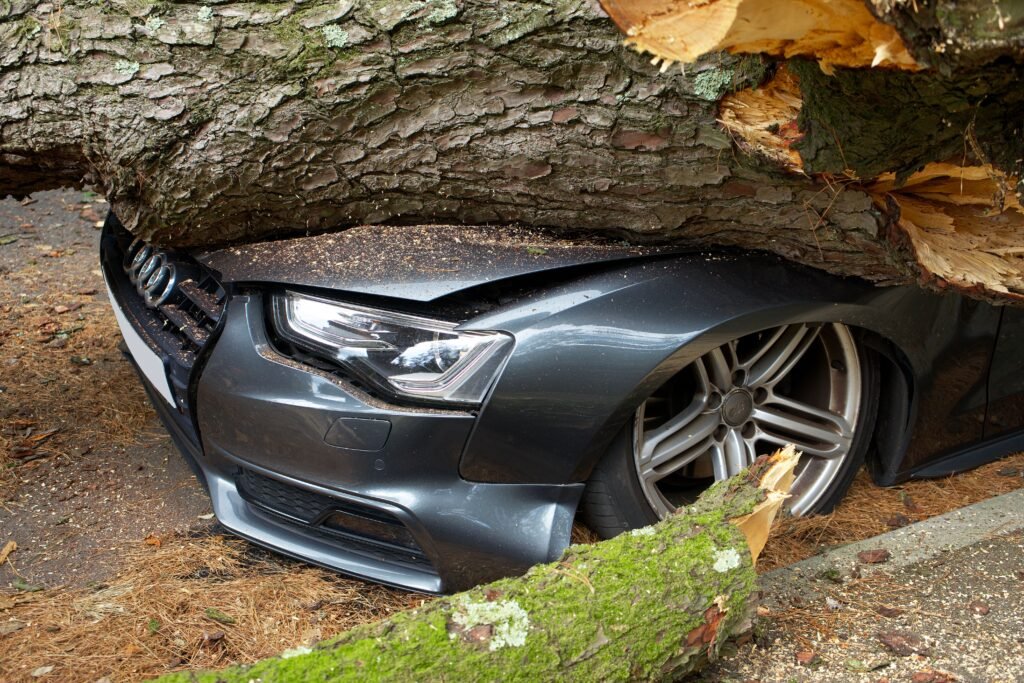
Unexpected falling objects can severely damage vehicles, including tree branches, construction materials, roof debris, utility equipment, and rocks.
- Animal Collisions
Striking wildlife particularly deer, elk, or livestock, can cause extensive damage, and accidents involving animals are generally covered under comprehensive insurance rather than collision coverage.
Personal Injury Protection (PIP)
Personal Injury Protection (PIP), also known as no-fault insurance, pays for medical bills, lost wages and other related expenses for you and your passengers after a car accident, regardless of who is at fault. This also includes funeral expenses. PIP is mandatory in no-fault states and optional in most other states.
Depending on the policy, PIP may cover:
- Medical Expenses
Including ambulance transportation, emergency room treatment, hospital stays, surgery, X-rays, physical therapy, rehabilitation, and follow-up care.
- Lost Wages
If injuries prevent you from working, PIP may reimburse a portion of your lost income during recovery.
- Essential Services
Some policies help pay for services you cannot perform while injured, such as childcare, housekeeping, and lawn maintenance.
- Funeral Expenses
If a covered accident results in death, PIP may contribute toward funeral and burial costs according to policy limits.
Because benefits are paid regardless of fault, PIP often speeds up compensation and reduces the need for lengthy liability disputes.
Medical Payments Coverage (MedPay)
Medical Payments Coverage, commonly known as MedPay, is similar to PIP but usually provides narrower protection. MedPay typically covers reasonable medical expenses for the driver, family members, and passengers, including ambulance services, emergency care, hospital treatment, surgery, and diagnostic imaging.
Unlike PIP, MedPay generally does not cover lost wages, childcare, household assistance, or essential services. MedPay can supplement health insurance by helping pay deductibles, copayments, and other out-of-pocket medical costs after an accident.
Uninsured Motorist Coverage (UM)
Despite legal requirements, many motorists continue to drive without insurance. Uninsured Motorist (UM) coverage protects you if an uninsured driver causes an accident. Depending on your policy, UM may cover medical expenses, lost wages, pain and suffering, permanent injuries, and funeral expenses. This coverage also commonly applies to hit-and-run accidents when the responsible driver cannot be identified. Without UM coverage, recovering compensation from an uninsured driver can be difficult or impossible.
Underinsured Motorist Coverage (UIM)
Some drivers carry insurance, but only at the minimum legal limits. Underinsured Motorist (UIM) coverage applies when an at-fault driver’s insurance policy limits won’t cover all the damages you suffered in an accident. For example, if your injuries total $250,000 but the at-fault driver’s liability policy only pays $100,000, UIM coverage may pay some or all of the remaining eligible damages, subject to your own policy limits.
Gap Insurance
Vehicles depreciate rapidly, particularly during the first few years of ownership. Gap insurance covers the difference, or “gap,” between what you owe on an auto loan and your insurance reimbursement when your car is totaled or stolen. If your car is totaled or stolen, there may be a “gap” between what you owe on the vehicle and your insurance coverage.
For example:
- Remaining loan balance: $32,000
- Vehicle’s actual cash value: $27,000
- Without gap insurance, the owner must pay the remaining $5,000 out of pocket. Gap coverage helps eliminate this financial burden.
Gap insurance is only used in the event of a total loss from a covered accident or theft, not for mechanical repairs, and does not cover bodily injuries, medical expenses, lost wages, or funeral costs. Gap insurance is typically very affordable, often only increasing your car insurance rates by a few dollars per month.
Rental Reimbursement Coverage
If your insured vehicle is being repaired after a covered claim, rental reimbursement coverage helps pay for a temporary replacement vehicle. Rental reimbursement coverage is quite cheap and costs between $2 and $15 per month, with most policies having daily and per-claim limits (for example, $30 per day, up to $900). This coverage typically begins immediately after a claim is approved and lasts for the duration of the repairs. Depending on your insurance provider, public transportation or rideshare costs may also be covered under rental reimbursement coverage, which is why this coverage is also known as “transportation expense coverage.”
Roadside Assistance Coverage
Roadside assistance provides emergency services when your vehicle becomes disabled. Covered services often include towing and labor charges associated with getting your vehicle running again in the event of a breakdown. While relatively inexpensive, roadside assistance can save significant money and inconvenience during unexpected breakdowns.
New Car Replacement Coverage
Standard insurance typically reimburses only the vehicle’s actual cash value after depreciation. New Car Replacement Coverage offers enhanced protection by replacing a totaled new vehicle with a brand-new vehicle of the same or similar make and model, rather than paying only its depreciated value. This coverage usually applies in limited circumstances, for example, only up to one to three years after the car is purchased. Availability varies among insurers and often applies only to vehicles below a specified age or mileage threshold.
Mechanical Breakdown Insurance (MBI)
Mechanical Breakdown Insurance (MBI) helps cover the cost of repairing certain mechanical or electrical failures that are unrelated to accidents. Depending on the policy, covered components may include the engine, transmission, drive axle, steering system, air conditioning, electrical systems, and fuel system.
However, it generally does not cover routine maintenance, wear and tear, oil changes, brake pads, tires, or cosmetic damage. Unlike a manufacturer’s warranty, MBI may continue after factory warranty coverage expires.
How Much Auto Insurance Do You Need?

One of the most common questions drivers ask is, “How much auto insurance is enough?” The answer depends on several factors, including your state’s legal requirements, your financial situation, the value of your vehicle, and your personal risk tolerance.
While purchasing only the minimum insurance required by law may seem like the least expensive option, minimum coverage often provides limited financial protection. While the average cost of a bodily injury liability claim in 2023 was $26,501, that amount is already higher than the per person minimum requirement in most states. A serious accident can quickly exceed these limits, leaving you personally responsible for thousands or even hundreds of thousands of dollars in damages.
Choosing the right amount of coverage requires balancing affordability with adequate protection.
- Meet Your State’s Minimum Legal Requirements
Nearly every U.S. state requires drivers to carry a minimum amount of liability insurance before legally operating a vehicle.
One of the most common sets of minimum limits is $25,000/$50,000/$25,000, which means $25,000 for bodily injury per injured person, $50,000 for bodily injury per accident, and $25,000 for property damage per accident.
While meeting the legal minimum keeps you compliant with state law, it may not provide enough protection if you are involved in a serious accident. If damages exceed your policy limits, you may be responsible for paying the remaining balance out of your own assets.
- Consider Your Financial Situation
Insurance should protect not only your vehicle but also your financial future.
Ask yourself:
- Do you own a home?
- Do you have significant savings or investments?
- Could you afford a major lawsuit?
- Would you be able to replace your vehicle without insurance?
Drivers with greater assets often benefit from purchasing higher liability limits because they have more personal assets that could be targeted in a lawsuit.
- Evaluate Your Vehicle’s Value
The value of your vehicle plays a major role in determining which coverages make financial sense.
- New or Expensive Vehicles
For newer vehicles, comprehensive and collision coverage are usually worthwhile because repair or replacement costs are high. If your vehicle is leased or financed you may need comprehensive and collision coverage as part of your loan or lease agreement.
- Older Vehicles
If your vehicle has a relatively low market value, paying for comprehensive and collision coverage may not be cost-effective. You can consider dropping collision and comprehensive coverage when your annual premiums equal or exceed 10 percent of your car’s book value, and/or the vehicle is more than 10 years old.
4. Choose Appropriate Liability Limits
Liability insurance protects your finances if you cause injuries or property damage to others.
The Insurance Information Institute notes that industry and consumer groups recommend bodily injury liability limits of $100,000 per person and $300,000 per accident – far higher than the required state minimums. Insurance agents may call this “100/300/100” coverage, and it’s usually a good balance between coverage limits and premium costs. If you have significant financial assets, consider taking out additional coverage, such as 250/500/250.
Although higher limits increase premiums slightly, they can provide significantly greater financial protection.
5. Decide Which Optional Coverages You Need

6. Balance Affordability with Protection
Saving a few hundred dollars annually by purchasing minimal coverage can expose you to enormous financial losses after a serious accident. If you want to save money on premiums, you need to first understand the three main kinds of coverage: Liability insurance pays for damage you cause in a crash. Comprehensive and collision coverage help pay for damage to your own vehicle.
Full coverage adds collision and comprehensive coverage to your policy, adding $50 to $250 monthly depending on your location, car model and driving record. In analysis, 79% of drivers who shop choose full coverage.
Instead, consider:
- Your monthly budget
- Your emergency savings
- Your ability to absorb unexpected expenses
- The likelihood of major financial losses
Review Your Coverage Regularly
Insurance needs change over time.
Review your policy whenever you:
- Purchase a new vehicle
- Move to a new location
- Get married
- Add teenage drivers
- Retire
- Pay off an auto loan
- Experience significant income changes
Annual policy reviews help ensure your coverage remains appropriate for your changing circumstances.











Leave a comment